
Product guide
Side-Opening & Combination-Lid Folding Storage Boxes: A Buyer's Guide
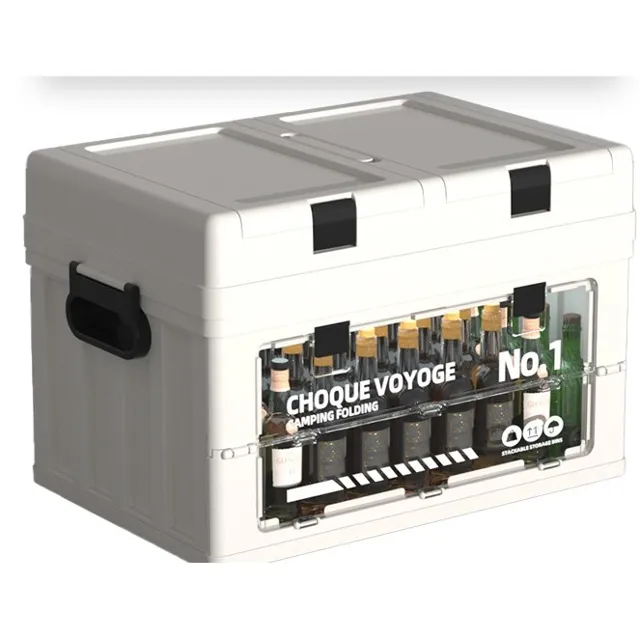
When folding crates are stacked in a garage, warehouse aisle or retail backroom, the lid on the top box is easy to open — but everything underneath is locked in place. That is the problem a side-opening folding storage box solves. A side door (or a combination lid that opens from the top and the side) lets users pull items from a lower crate without unstacking the whole column. For importers and retailers, this feature is one of the clearest differentiators in the wholesale folding crate category, and it is worth understanding before you lock a specification.
1. What "side-opening" and "combination lid" actually mean
Suppliers use these terms in slightly different ways, so clarify them in your brief:
- Side-opening folding crate. The body has a hinged panel or door on one long side. With the walls locked upright, you can open that panel and reach into the crate while other boxes stay stacked on top.
- Combination lid. The lid itself has more than one opening mode — typically a full top lid plus a flap or hatch that can open when space above is limited, often paired with a side access panel on the body.
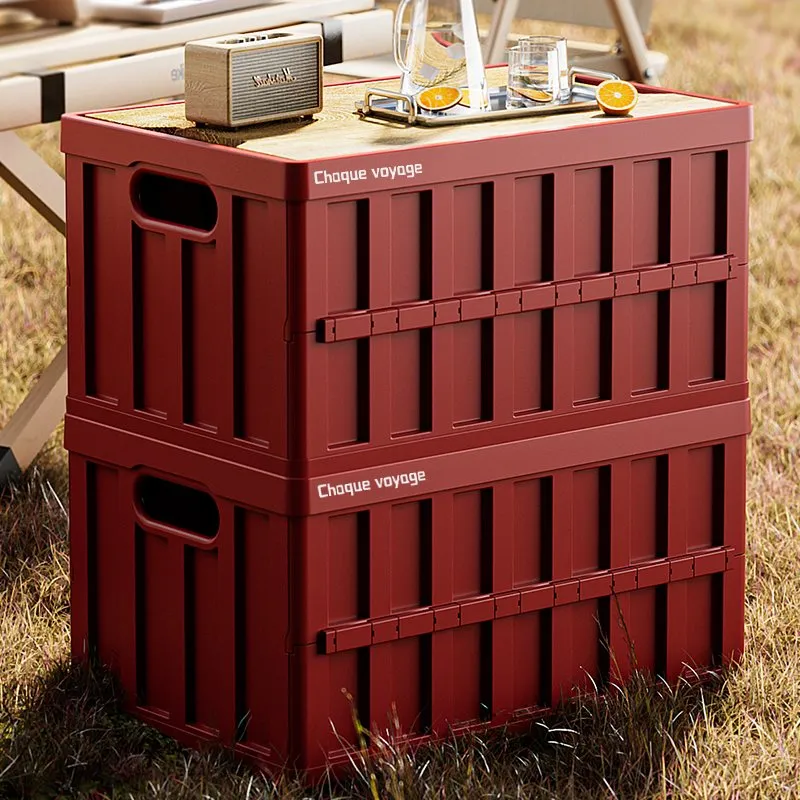
- Wood-grain vs plastic lid. Many camping and home models use a wood-look panel that doubles as a small table when the crate is closed. Plastic lids are lighter and easier to color-match to the body.
Ask for a short video of the door and lid in use, not only still photos. Photos rarely show how the latch feels or whether the panel stays open while you load items.
2. Why B2B buyers specify side access
Importers usually choose a side-opening or combination-lid design when the end use involves frequent picking from a stack:
- Home and garage storage. End users keep seasonal items or tools stacked against a wall and want to open the middle box without moving the upper ones.
- Camping and outdoor retail. Crates often sit under a table or in a car trunk where lifting the top lid is awkward; a side door is more practical. See our guide to collapsible camping crates for outdoor-specific options.
- Retail and backroom replenishment. Staff can restock from the side of a stack in a narrow aisle.
- Van and warehouse pick faces. Side access turns a stack into a small pick face without dedicated shelving.
If your customers mainly store items long-term and rarely open middle boxes, a simpler top-lid folding crate may be enough — and usually costs less to mold and assemble. For a broader sourcing overview, read how to source folding storage boxes from China.
3. Spec points to put in your RFQ
When you request a quote for a wholesale folding crate with a side door, include more than size and color:
- Door size and location. Full-side panel vs half-height hatch; front long side vs short end.
- Latch type. Snap clips, sliding locks or gravity catches — and whether they must stay closed if the crate is tipped slightly.
- Lid style. Combination lid, wood-grain panel, or plastic only.
- Stacking interface. How the lid nests with the base of the crate above; ask for photos of a three-high stack under load.
- Material. Most folding crates use polypropylene (PP) for hinge flex. Compare resins in our PP vs HDPE article.
- Color and branding. Body, lid and door can be different colors; logos may go on the lid, door or packaging. Details are in our OEM custom color and logo guide.
MOQ, lead time and unit price depend on the model and level of customization — ask for a quote on the exact combination you need rather than assuming a catalog number covers everything.
4. What to check on samples
Side-door mechanisms add moving parts. On samples, test:
- Open and close the side panel dozens of times; hinges and snaps should not loosen quickly.
- Stack two or three loaded crates and open the middle door without shifting the stack.
- Confirm the door does not foul the lid or the crate above when fully open.
- Check wall thickness around the door cutout — thin sections here are a common weak point.
- Inspect latch feel and whether the door rattles when the crate is carried.
Also fold the crate flat and measure packed height. Side-door tooling can add a little part weight, but the product should still ship efficiently compared with rigid non-folding boxes.
5. Packing and landed cost
Side-opening models still fold flat for export, which keeps ocean freight competitive. Ask each supplier for carton dimensions, pieces per carton and gross weight, then calculate cost per unit landed in your warehouse. A slightly heavier door design can still win if the carton packs denser or if retail sell-through is stronger because of the feature.
6. Side-opening models from Lizhong
Guangdong Lizhong Plastic manufactures folding storage crates with combination lids and side doors at our 11,500 m² factory in Jieyang, Guangdong. We are ISO 9001 certified, hold import and export rights, and support OEM/ODM color and logo work. Models to start with:
- H-8123 Folding Storage Crate with Combination Lid & Side Door
- H-8023 Side-Opening Folding Storage Crate with Wood-Grain Lid
- H-8013 Oval-Handle Folding Storage Crate with Wood-Grain Lid
- G-8003 Folding Storage Crate with Plastic Lid
- 8001 / 8002 / 8003 Folding Storage Crate with Wood-Grain Lid (3 sizes)
Not sure whether you need foldable crates or rigid stackable boxes? Read our comparison: stackable vs foldable plastic storage boxes.