
Buyer guide
PP vs HDPE: Choosing Plastic for Storage Boxes
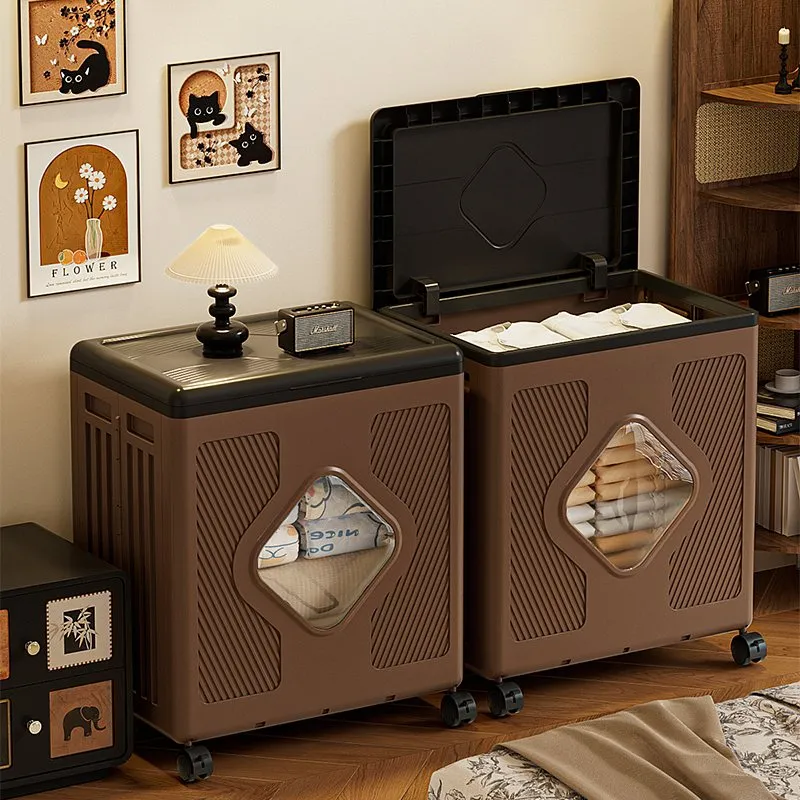
Polypropylene (PP) and high-density polyethylene (HDPE) are the two plastics you will meet most often when sourcing storage boxes, crates, bins and household containers. Both are inexpensive, widely available, lightweight and resistant to water and many household chemicals. Yet they behave differently, and choosing the right one affects how a product looks, how it holds up in use and what it costs to make. This guide compares PP and HDPE from a buyer's point of view.
The basics
Polypropylene is a thermoplastic polymer widely used for packaging, automotive parts, housewares and textiles. High-density polyethylene is a polyethylene made with a highly linear structure, giving it a good strength-to-density ratio; it is common in bottles, pipes, cutting boards and heavy-duty containers. Both belong to the polyolefin family and both can be processed by injection molding.
Side-by-side comparison
| Property | PP | HDPE |
|---|---|---|
| Stiffness | Generally stiffer at room temperature | Generally more flexible |
| Heat resistance | Higher melting point; tolerates hot water better | Lower melting point |
| Low-temperature impact | Standard grades can become brittle in cold; copolymer grades improve this | Generally tough in cold conditions |
| Fatigue / living hinges | Excellent; used for flexing hinges and snap features | Less suited to repeated hinge flexing |
| Surface look | Can achieve glossy or clear-ish finishes | Typically waxy, matte feel |
| Transparency | Clarified grades allow fairly transparent parts | Translucent to opaque |
| Recycling code | 5 | 2 |
These are general tendencies. Specific grades, additives and wall designs can shift the picture considerably, so always evaluate actual samples.
Where PP makes sense
- Folding crates. Collapsible boxes rely on hinges and snap-fit walls that flex repeatedly. PP's fatigue resistance makes it the usual choice. See our guide to collapsible camping crates.
- Clear or see-through storage. Clarified PP is used for transparent containers such as food bins and rice dispensers where users want to see contents.
- Kitchen items that meet hot water. Colanders, dish racks and basins benefit from PP's heat resistance.
- Precise, rigid parts. Lids, drawers and organizers that must keep their shape.
Where HDPE makes sense
- Heavy-duty bins used in cold environments, where impact toughness matters.
- Products that need some flex rather than rigidity, such as certain buckets or tubs.
- Blow-molded items such as bottles and some large hollow containers.
Food contact
Both PP and HDPE are widely used in food-contact applications, but "food grade" is not a property of the plastic family alone. It depends on the specific resin grade, colorants and additives, and on the regulations of the market where the product is sold. If your product will touch food, tell your supplier the target market at the start and agree on what material declarations or testing you need. Our kitchen storage wholesale guide discusses this further.
Virgin vs recycled material
Both plastics are recyclable and both are available as recycled resin. Recycled content can reduce cost and appeal to sustainability-minded customers, but it can also limit color options (especially bright or light colors), introduce odor or variability, and affect strength. If you want recycled content, specify the percentage and test samples carefully. If you need consistent bright colors or clear parts, virgin material is usually the safer choice.
How material affects price
Resin is typically the largest cost in a plastic storage box, so material choice and part weight drive the unit price. Raw material prices for PP and HDPE fluctuate with oil and petrochemical markets, so quotes are usually valid for a limited period. When comparing quotes, confirm that suppliers are using the same material, the same virgin/recycled ratio and a similar part weight.
Questions to ask your supplier
- Which polymer and grade is used for each part (body, lid, handle)?
- Is the material virgin, recycled, or a blend?
- How does the product perform in heat or cold, given my market?
- What documentation is available for food-contact or other compliance needs?
- What is the part weight, and how does it compare with alternatives?
Design matters as much as material
A well-designed PP box can outperform a poorly designed HDPE box, and the reverse is also true. When comparing samples, look at wall thickness, rib placement, corner radii and the way the lid locks to the body. Ribs and thicker corners add stiffness without making the whole part heavier. Sharp internal corners concentrate stress and are common points of cracking, especially in cold weather. A good manufacturer will choose the material and the geometry together, rather than treating material as a separate decision.
Additives that change performance
Base resins are often modified with additives. UV stabilizers slow fading and embrittlement in sunlight, which matters for outdoor crates. Impact modifiers improve toughness. Clarifiers improve transparency in PP. Antistatic agents can reduce dust attraction on display products. Each additive changes cost slightly and may affect compliance documentation, so ask which additives are included in the grade your supplier proposes and why.
Summary
For most storage boxes, especially folding crates, clear containers and kitchen items, PP is the default because of its stiffness, heat resistance and hinge performance. HDPE shines where cold-weather toughness and flexibility matter more than rigidity or clarity. The right answer depends on your product and market, so test samples in realistic conditions.
Lizhong Plastic manufactures injection-molded storage and household products in our 11,500 m² ISO 9001 certified factory. Examples include the G-8003 folding crate, the 601 / 602 / 603 sliding-lid clear rice bin and the colander & drain basket set. Ask us which material is used for any model you are considering.