
Product guide
Rolling Stackable Plastic Storage Cabinets: A Wholesale Buyer's Guide
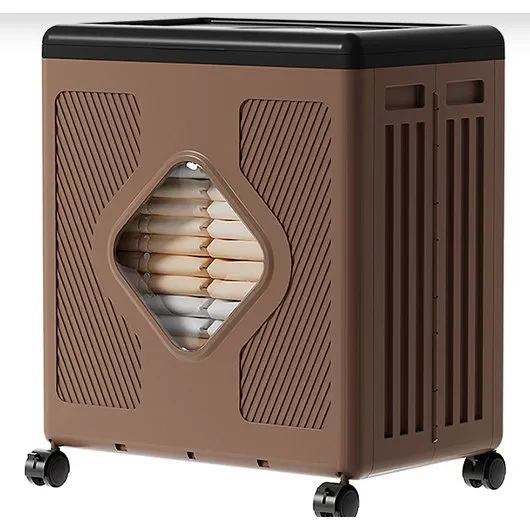
Rolling stackable plastic storage cabinets sit between a drawer chest and a wheeled trolley. Retailers and importers buy them for bedrooms, laundry rooms, offices and small warehouses where buyers want pull-out drawers, a small footprint and the ability to move the unit without lifting. For B2B buyers, the category looks simple in a catalog photo — but wheels, stack interfaces, drawer slides and wall thickness decide whether the product survives retail returns. This guide covers what to specify before you request a wholesale quote from a China factory.
1. What "rolling stackable" usually means
Suppliers use overlapping names: rolling drawer cabinet, stackable storage trolley, modular drawer unit. Clarify three points in your brief:
- Rolling. Casters or fixed wheels under the base. Confirm how many wheels lock, and whether the unit stays stable when a loaded drawer is pulled out.
- Stackable. Modules that lock or nest so you can build two or three tiers. Ask whether stacking is tool-free and whether the top unit can still roll as one piece.
- Drawer vs open bin. Full drawers with fronts vs open trays. Drawers hide clutter for bedroom retail; open bins suit laundry or workshop use.
Ask for a short video of stacking, rolling and opening drawers under load — still photos rarely show drawer sag or wheel wobble.
2. Why importers add this SKU
Wholesale buyers usually place rolling cabinets when they need a mid-ticket home-storage item that is easy to demonstrate in-store or online:
- Bedroom and closet retail. Drawers hold clothes, accessories or documents; wheels help when the room layout changes. Pair with an underwear organizer box for a wardrobe assortment.
- Laundry and utility rooms. A rolling cabinet next to a washer keeps detergents and folded laundry off the floor. See also our vertical tiered laundry basket.
- Small offices and studios. Narrow footprints fit beside desks where metal filing cabinets feel oversized.
- Modular merchandising. Stackable designs let retailers sell one, two or three tiers as separate SKUs or a set.
If your customers mainly need long-term sealed storage that folds flat for freight, a folding crate may be a better core SKU. Compare formats in our stackable vs foldable plastic storage boxes guide, and read how to source folding storage boxes from China for crate-specific sourcing.
3. Spec points for your RFQ
When you request a quote for a rolling stackable cabinet, go beyond color and piece count:
- Overall size and drawer count. Width, depth, height per tier; number of drawers and usable inner height.
- Wheel type. Swivel vs fixed; lockable casters; soft floors vs tile; whether wheels ship attached or as spare parts.
- Stack interface. How the top of one unit locks to the base of the next; photos of a two- or three-high stack under load.
- Drawer travel and stop. Full extension vs partial; stop so drawers do not fall out when pulled hard.
- Material and wall thickness. Most home cabinets use polypropylene (PP). Compare resins in our PP vs HDPE article.
- Color and branding. Body, drawer fronts and wheels can differ; logos may go on the front panel or packaging. See our OEM custom color and logo guide.
MOQ, lead time and unit price depend on the model and level of customization — ask for a quote on the exact combination you need rather than assuming a catalog number covers everything.
4. What to check on samples
Moving parts and wheels are where returns start. On samples, test:
- Load each drawer with typical retail weight and open/close dozens of times; watch for sagging or scraping.
- Pull the heaviest drawer fully open and nudge the cabinet — it should not tip forward easily.
- Roll the unit across a hard floor and a soft surface; check for noise, wheel drop-out and sticky casters.
- Stack two or three modules, then roll and open drawers on the upper tier.
- Inspect ribs and corners for thin spots; measure wall thickness at drawer fronts and side walls.
- Confirm labels, color consistency and any printed logo against your artwork.
Also ask how the product packs for export: assembled, flat-pack or nestable drawers. Carton size and pieces per carton drive landed cost as much as ex-works price.
5. Packing and assortment planning
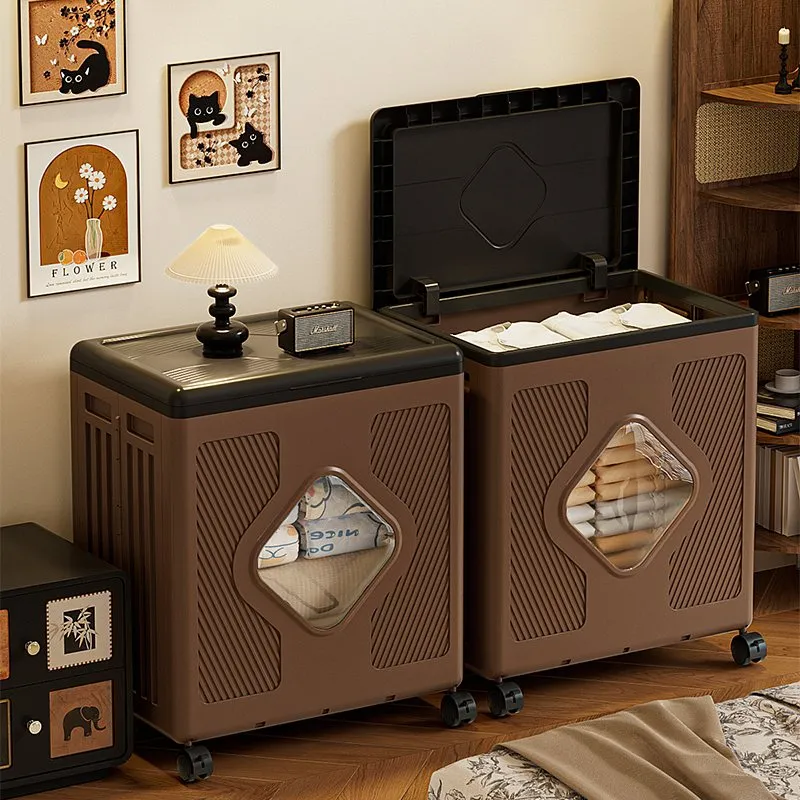
Rolling cabinets are bulkier than folding crates, so ask each supplier for carton dimensions, pieces per carton and gross weight, then calculate cost per unit landed in your warehouse. Some buyers ship one display sample assembled and the rest nested to save cube. Plan related SKUs — laundry baskets, organizers, basins — so one container can fill a full home-storage aisle rather than a single lonely cabinet.
6. Rolling cabinets from Lizhong
Guangdong Lizhong Plastic manufactures household storage products at our 11,500 m² factory in Jieyang, Guangdong. We are ISO 9001 certified, hold import and export rights, and support OEM/ODM color and logo work. Start with:
- Rolling Stackable Storage Cabinet 8501
- Vertical Tiered Laundry Basket (S / M / L)
- Underwear Organizer Box (Open / 10-grid / 15-grid)
Need custom colors or logos on the drawer front? Read our OEM plastic storage box custom color and logo article, then send your artwork with the RFQ.