
Buyer guide
Plastic Rice Dispensers and Kitchen Storage: Wholesale Buying Guide
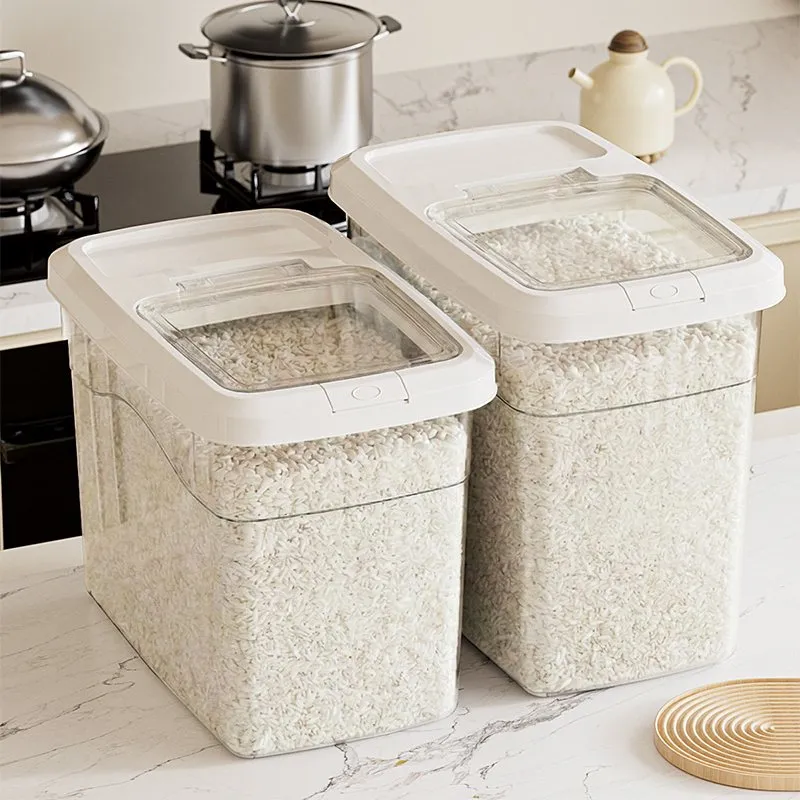
Kitchen storage is a steady, repeat-purchase category for supermarkets, home goods stores, online sellers and distributors. Rice dispensers, cereal and grain bins, dish drainers, colanders and organizer boxes sell year-round, and in many markets demand is driven by everyday cooking habits rather than seasonal trends. For wholesale buyers, the challenge is choosing products that combine practical function, food-safety confidence and efficient logistics. This guide covers what to look for when buying plastic rice dispensers and related kitchen storage wholesale.
Types of plastic rice dispensers
Flip-lid bins
A flip-lid bin is the simplest design: a container with a hinged lid, often with a scoop. They are easy to fill, easy to clean and suit households that buy rice or grains in bulk. Clear bodies let users see how much is left.
Sliding-lid bins
A sliding lid opens partially, which is convenient on a counter or inside a cabinet with limited headroom. Look at how smoothly the lid slides and how well it seals when closed.
Push-button / measuring dispensers
Dispensers with a push button or measuring mechanism release a set portion of rice. They appeal to customers who want portion control and a tidy countertop. Because they contain moving parts, test the mechanism repeatedly with real grains to check for jamming and breakage.
Key quality checks
- Seal. A good seal helps keep out moisture and pests. Check gaskets or lid fit.
- Clarity. For clear bodies, look for haze, streaks or bubbles. Clarified polypropylene is common; see PP vs HDPE for material background.
- Odor. Products intended for food should have no noticeable chemical smell.
- Mechanisms. Push buttons, hinges and sliding tracks should operate smoothly after many cycles.
- Cleanability. Can the user disassemble and wash all parts that touch food? Avoid hard-to-reach crevices.
- Stability. Tall dispensers should not tip easily when full.
Food-contact compliance
This is the most important topic in kitchen storage, and it varies by market. Regulations in the EU, the United States and other regions set requirements for materials intended to come into contact with food, and many retailers add their own testing requirements. A supplier cannot pick the right tests for you without knowing where you sell. Practical steps:
- Tell the supplier your target market and sales channel at the inquiry stage.
- Ask what material grades and colorants are used for food-contact parts.
- Agree on which declarations or third-party lab tests are required, and who pays for them.
- Keep test reports linked to the specific material and color you approved; changing either may require retesting.
Building a kitchen storage range
Rice dispensers sell better alongside complementary items. Many buyers build a coordinated range in matching colors:
- Rice and grain bins in two or three capacities
- Covered dish cabinets and dish drainers
- Colander and drain basket sets
- Small organizer boxes for drawers and fridges
Sourcing a range from one manufacturer simplifies color matching, consolidates shipments and gives you one point of contact for quality issues.
Choosing capacities
Capacity labels vary between suppliers: some list the weight of rice a bin holds, others list volume in liters. When comparing products, ask how capacity was measured and test it yourself with real grains. Offering two or three capacities lets customers choose based on household size and how much rice they buy at once, and consistent styling across sizes encourages multi-unit purchases.
Packaging and logistics
Unlike folding crates, rice bins and dish racks are rigid and bulky. Freight cost per unit can be significant, so:
- Ask whether different sizes can nest inside each other for shipping.
- Compare individual color boxes with bulk packing; color boxes add protection and shelf appeal but increase volume.
- Request carton dimensions, gross weight and pieces per carton for every item and calculate landed cost per unit.
- Protect clear surfaces from scratches during transit with film or sleeves.
Private label and customization
Kitchen products are well suited to private label. Common customizations include body or lid color, a logo printed on the lid, branded scoops and custom retail packaging. Be cautious when changing colors on food-contact parts: new colorants may need to be covered by your compliance documentation. Read more in OEM plastic storage boxes: custom color and logo explained.
Pricing, MOQ and lead time
Pricing depends on part weight, material, mechanism complexity, color, packaging and quantity. MOQ and lead time depend on the model and on whether you choose stock colors or custom colors and packaging. Rather than rely on a single headline number, ask your supplier for a quote based on your exact specification. At Lizhong, we quote each request individually; ask us for the models you are interested in.
A wholesale buying checklist
- Choose dispenser types that match your customers' habits.
- Test samples with real rice: filling, dispensing, sealing and cleaning.
- Confirm material and food-contact documentation for your market.
- Plan a coordinated range and colors.
- Calculate landed cost using actual carton data.
- Approve a pre-production sample before mass production.
Kitchen storage from Lizhong
Guangdong Lizhong Plastic manufactures kitchen storage products in our own 11,500 m² ISO 9001 certified factory, with import and export rights and OEM/ODM support. Explore:
- T-601 / T-602 / T-603 Flip-Lid Clear Rice Dispenser Bin
- 601 / 602 / 603 Sliding-Lid Clear Rice Storage Bin
- 801 / 802 Push-Button Rice Dispenser Bin
- 0701 / 0702 / 0703 Covered Dish Cabinet / Dish Drainer
Curious how these containers are produced? See how injection molded storage boxes are made.