
Buyer guide
How Injection Molded Storage Boxes Are Made (From Mold to Container)
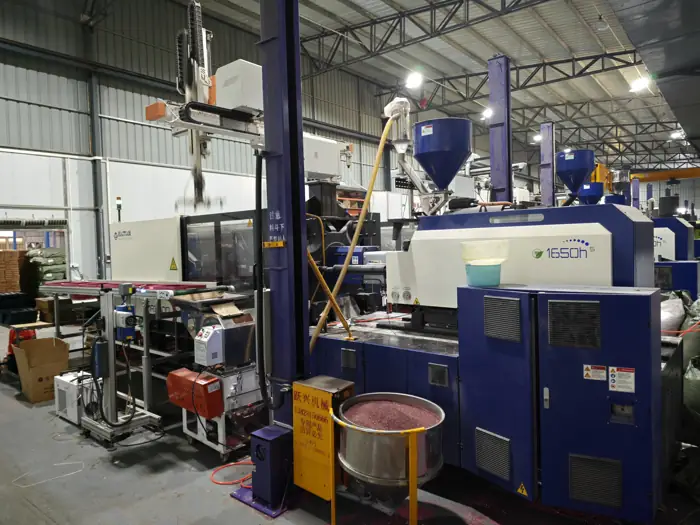
Almost every plastic storage box on a store shelf, from a folding camping crate to a clear rice bin, is made by injection molding. Understanding the process helps buyers ask better questions, read quotations more confidently and spot the causes of common quality problems. This article walks through how injection molded storage boxes are made, from the mold to the finished, packed container.
What is injection molding?
Injection molding is a manufacturing process in which molten plastic is forced into a mold cavity, cooled until solid and then ejected as a finished part. It is ideal for storage boxes because it produces complex shapes with consistent dimensions at high volume and low cost per part, once the mold exists.
Step 1: Product design
Everything starts with a design. Engineers define the box dimensions, wall thickness, ribs for stiffness, hinge and clip features, handle shape and how the lid and body fit together. Good design for molding keeps walls fairly uniform, adds draft angles so parts release from the mold, and places ribs where loads are highest. Manufacturers that develop their own designs may protect them with design patents; Lizhong Plastic holds design patents on several of its own products.
Step 2: Mold making
The mold (also called tooling) is a precision steel block machined with the negative shape of the part. It has two halves, a cavity side and a core side, plus channels for plastic to flow in (the sprue, runners and gates), cooling channels for water, and an ejector system to push the part out. Large storage boxes often need large, heavy molds, and complex features such as side doors or folding walls can require slides or lifters that move as the mold opens.
Mold making is the main upfront investment in a new product, which is why buyers often start with a manufacturer's existing catalog molds and customize color and branding instead. If a project needs a new mold, the supplier will discuss mold cost, ownership and the sample (trial) process separately.
Step 3: Material preparation
Storage boxes are typically molded from polypropylene or polyethylene pellets (see PP vs HDPE). Color is added by blending a color masterbatch with the natural resin. The ratio is controlled so that color stays consistent across batches. Some materials are dried before molding; others, like most polyolefins, generally are not sensitive to moisture.
Step 4: The molding cycle
The molding machine repeats a cycle with four main stages:
- Clamping. The machine closes the two mold halves and holds them shut with high force so molten plastic does not escape.
- Injection. A rotating screw melts the pellets by heat and friction and injects the melt into the mold under pressure.
- Cooling. Water flowing through the mold removes heat until the part is rigid. Cooling is often the longest part of the cycle, and thicker walls take longer.
- Ejection. The mold opens and ejector pins push the part out, either into the hands of an operator or onto a conveyor, or picked by a robot arm.
Machine size is described by clamping force. Large parts such as storage cabinets or big crates need larger machines than small organizers. Factories set process parameters such as temperatures, pressures, speeds and cooling time for each mold to balance quality and cycle time.
Step 5: Trimming and inspection
After ejection, operators remove the gate remnant and check for defects. Common injection molding defects include:
- Short shots: the cavity did not fill completely.
- Flash: thin excess plastic at the parting line, often due to mold wear or excessive pressure.
- Sink marks: shallow depressions over thick sections.
- Warping: distortion caused by uneven cooling or internal stress, which can make lids fit poorly.
- Color streaks: incomplete mixing of masterbatch.
A documented quality management system, such as one certified to ISO 9001, defines how these checks are done, recorded and corrected.
Step 6: Decoration and branding
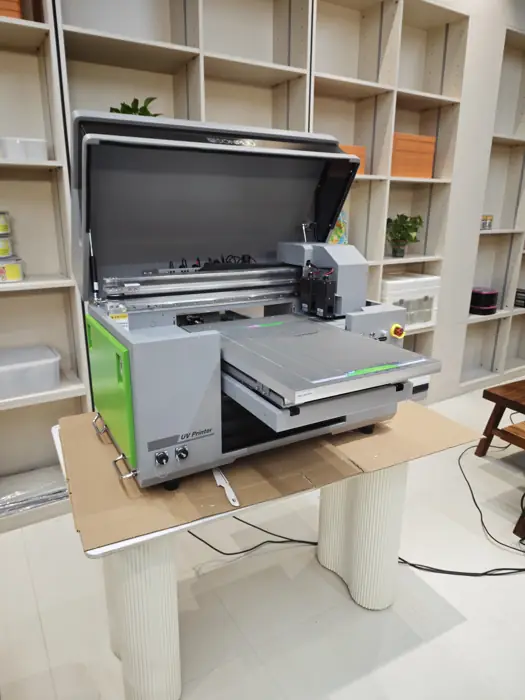
Once parts pass inspection, they can be decorated. Typical methods for storage boxes include UV printing, laser marking and automatic labeling. In-mold decoration and molded-in logos are alternatives that happen during molding itself. Our article on custom color and logo compares these methods.
Step 7: Assembly and packing
Many storage boxes are made of several molded parts: body, lid, folding side walls, handles, hinge pins, drawers or wheels. These are assembled by hand or with simple fixtures, then checked for fit and function. Finally, products are packed in polybags, color boxes or bulk cartons, and cartons are marked according to the buyer's requirements.
What this means for buyers
- Price is linked to weight and cycle time. Heavier parts use more resin and cool more slowly.
- Existing molds save time and cost. Customizing color and branding on catalog products avoids tooling investment.
- Color changes have a cost. Purging between colors is one reason custom colors carry minimum quantities.
- Ask about defects specifically. Agree on how flash, warping and color variation will be judged.
See it in our factory
Guangdong Lizhong Plastic runs injection molding, UV printing, laser marking and auto-labeling in its 11,500 m² ISO 9001 certified factory in Jieyang, Guangdong. Products made this way include the 8501 rolling stackable storage cabinet, the H-8013 folding crate and the 1101 medicine box. If you are new to sourcing, start with our buyer's guide to sourcing from China.